Part One:
- What do you know about your ancestors?
- When and how did civilizations start to form in your country?
- What are the remnants in your culture today from your country’s early settlers?
Part Two:
Example:
 |
|
 |
 |
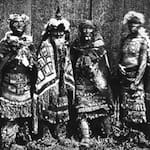 |
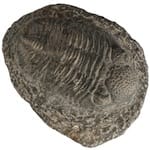 |
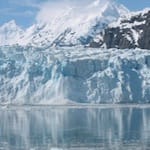 |
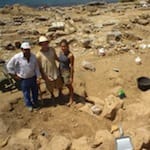 |
Part Two:
Part Three:
Island Hopping to a New World
Digging in a dark limestone cave in Canada's Haida Gwaii’s last summer, Christina Heaton hardly noticed the triangular piece of chipped stone she'd unearthed in a pile of debris. Then, as her scientist father, Timothy, sifted through the muck, he realized her find was actually invaluable. It was a spear point. Bear bones found near the artifact indicated its owner had presumably speared the beast, which later retreated into the cave and eventually died with the point still lodged in its body. Radiocarbon tests soon dated the remains at about 12,000 years old, making them the earliest signs of human activity in the region or, for that matter, in all of the Americas.
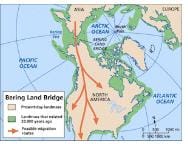 Almost from the moment the first white explorers set eyes on America's indigenous 'Indians’, people have wondered where they came from. Fray Jose Acosta, a Jesuit priest, was one of the first to make a sensible guess in 1590 that a small group from Asia's northernmost areas must have walked to the New World. Indeed, since the 1930s, archaeologists have taught that the first Americans were hunters who crossed the Bering land bridge from Siberia, chasing mammoths southward through Canada down a narrow corridor between two ice sheets. By about 11,500 years ago, they'd got as far as Clovis, New Mexico, near where archaeologists first found their distinctive spear points. Their descendants ultimately reached the tip of South America after a grueling journey begun more than 20,000 miles away. Or so the story goes.
Yet the Heatons' find is the latest addition to a small but weighty pile of tools and human remains suggesting the first Americans may have come from Asia not down the centre of the continent but along the coast in boats, centuries or millenniums prior to the Clovis people. The evidence that Heaton and his colleagues are seeking has turned up along the Pacific coast all the way from Alaska to southern Chile. So far, it does not include any human remains of pre-Clovis age but a woman's bones were found on Santa Rosa Island off the Californian coast. While the bones show that the woman herself was alive 200-300 years after the Clovis people's long journey, it is likely that she was the descendant of earlier settlers. And scientists excavating Chile's Monte Verde site, over 6,000 miles from the southernmost Clovis find, have discovered medicinal herbs and artifacts that date back over 12,500 years.
Such finds have supported genetic and biological research to paint a far more complex picture of America's first explorers. Rather than a single migration of Clovis people, 'there were clearly several waves of human exploration,' says Douglas Wallace, a geneticist at the University of California-Irvine. Wallace's DNA studies of American natives identify at least five genetically distinct waves, four from Asia and one possibly of early European descent, the earliest of which could have arrived more than 20,000 years ago. That diversity supports research by linguists who argue the Americas' 143 native languages couldn't have all developed from a single 11,500-year-old tongue. And if they had, then the languages would be the most diverse along the mainland route the Clovis people travelled. In fact, the number of languages is greatest along the Pacific coast, adding to suspicions that at least some of the first immigrants came that way.
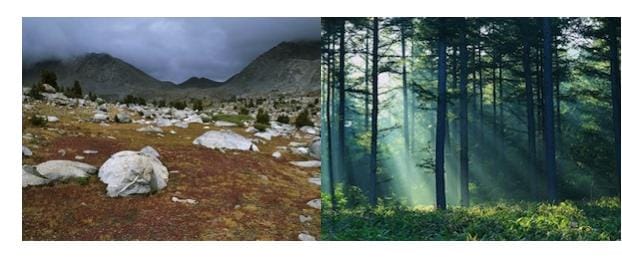 Until recently, many geologists assumed that the Ice Age shore was a glaciated wasteland. But new studies of fossils and ancient climates imply a navigable coastline full of shellfish and other foods, with grassy inland tundra capable of supporting large animals - and perhaps seafaring humans heading south. Unfortunately, the evidence that could prove the coastal migration scenario is well and truly hidden. Warming temperatures since the last Ice Age have transformed the ancient tundra to thick forests, rendering most signs of early human exploration all but invisible and melting Ice-Age glaciers have buried most of the coastal campsites where the ancient mariners may have stayed a while.
In l998, archaeologist Daryl Fedje retrieved an ancient hunting blade, one of the first human artifacts found in the region. This inspired some to call for a comprehensive high-tech search of the sea floor, yet the immense costs of a seafloor survey have prevented this. So Fedje and other researchers have instead focused on caves on the nearby islands and in Alaska, where artifacts are protected from weather and decay. ‘The caves have been a real windfall,' says Heaton of the animal bones he has found. He's confident that it's just a matter of time before he and his colleagues find
pre-Clovis human remains because 'in almost every cave we put our shovels to, we find something new.'