Have you ever wondered why the price of your favorite coffee sometimes goes up, or why some new smartphones are so difficult to buy when they are first released? These situations are not random; they are part of a large, complex system that affects us every day: the economy. In this lesson, we will explore some basic economic principles that influence the prices we pay, the products available to us, and the overall financial health of a country. Understanding these ideas will help you better analyze news, make informed decisions, and discuss important global issues.
Video: Crash Course Economics #4
This video provides a fast-paced and engaging overview of the core concepts of supply and demand.
Vocabulary Focus
Understanding the language of economics is the first step. Listen to the pronunciation and read the definitions of some key terms that will help us discuss the concepts in this unit.
| Word | Definition | Example |
|---|---|---|
| economy | (n.) the system of how money, goods, and services are produced and used in a country or region. | A strong economy often leads to more jobs and higher wages for workers. |
| inflation | (n.) the rate at which the general level of prices for goods and services is rising, and subsequently, purchasing power is falling. | Due to high inflation, $100 buys fewer groceries than it did last year. |
| recession | (n.) a period of temporary economic decline during which trade and industrial activity are reduced. | During the recession, many companies had to lay off employees to reduce costs. |
| market | (n.) a system where people can buy and sell goods or services. | The global market for smartphones is extremely competitive. |
| demand | (n.) the desire of consumers to buy a particular good or service. | There is always high demand for concert tickets for popular artists. |
| revenue | (n.) the total amount of money a business receives from its sales. | The company's annual revenue increased by 15% after launching the new product. |
| cost | (n.) the amount of money needed to produce a good or service. | The primary cost in manufacturing the tables is the price of wood. |
| profit | (n.) the financial gain made in a transaction; the difference between the revenue and the cost. | The business made a significant profit by selling its products for more than they cost to make. |
Reading Input: How Supply and Demand Works
One of the most fundamental concepts in economics is the relationship between supply and demand. This principle explains how prices are determined in a market. Let's break it down.
Supply refers to how much of a product or service is available. For example, the supply of strawberries is the total amount of strawberries that farmers have grown and are ready to sell.
Demand, as we learned, is how much of that product or service consumers want to buy. If it's a hot summer, the demand for strawberries might be very high for making cold drinks and desserts.
The relationship between these two forces sets the price. When supply and demand are balanced, the price is stable. This point of balance is called the equilibrium price. But what happens when they are not balanced?
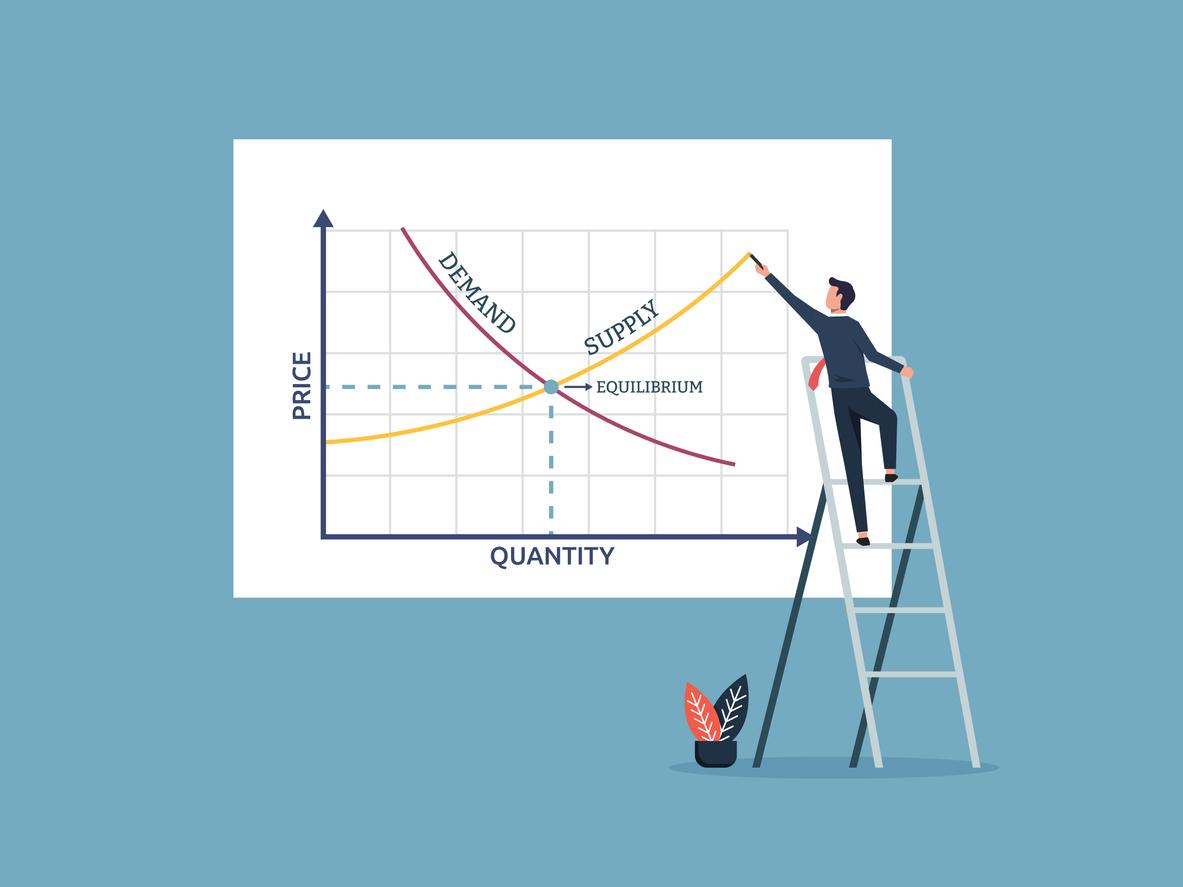
The Law of Supply and Demand
The demand curve slopes down, and the supply curve slopes up. The point where they cross determines the market's equilibrium price.
Grammar Focus: Describing Definitions and Conditions
Unlock full access by logging in. Registered users can explore the entire lesson and more.