In an increasingly interconnected world, the problems of one nation can quickly become the problems of all. From climate change and pandemics to economic crises and humanitarian disasters, global challenges require global solutions. This raises a fundamental and difficult question for every government and its citizens: Where does our responsibility lie? Should we focus on solving problems within our own borders first, or do we have a moral obligation to address suffering and instability wherever it occurs? In this lesson, we will explore this complex ethical dilemma through a structured debate.
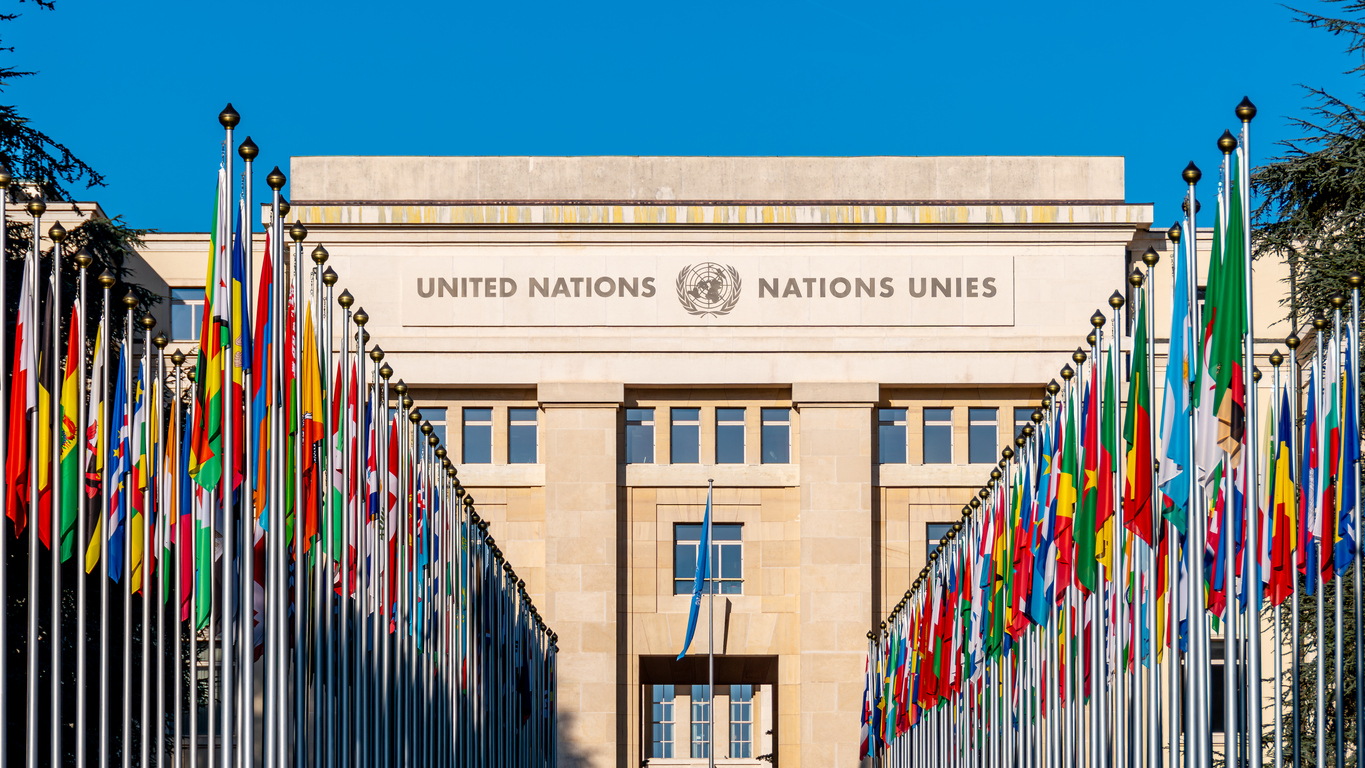
The Palace of Nations in Geneva, a United Nations office, symbolizes the commitment to multilateral cooperation.
Vocabulary
To discuss this topic effectively, you will need to use precise academic language. Study the key vocabulary below.
| Word | Definition | Example |
|---|---|---|
| accountability | The state of being responsible for one’s actions and decisions, and the expectation of being called to explain them. | Activists are demanding greater accountability from multinational corporations for their environmental impact. |
| intervention | The action of becoming intentionally involved in a difficult situation in order to improve it or prevent it from getting worse. | There was much debate about whether military intervention was justified to protect the civilian population. |
| cooperation | The action or process of working together to the same end. | International cooperation is essential to combat climate change effectively. |
| multilateral | Agreed upon or participated in by three or more parties, especially the governments of different countries. | The country signed a multilateral agreement to reduce nuclear weapons. |
| obligation | An act or course of action to which a person is morally or legally bound; a duty or commitment. | Many people believe that wealthy nations have a moral obligation to provide aid to developing countries. |
| sovereignty | The authority of a state to govern itself or another state; self-governing power. | The principle of national sovereignty means that other countries should not interfere in its internal affairs. |
Grammar Focus
When debating and negotiating, using the correct modal verbs and conditional structures is crucial for expressing your position clearly and persuasively.
Modals of Obligation
Modals of obligation help you express the level of necessity or duty you are arguing for. Notice the different strengths.
Must / Have to: These express strong obligation. 'Must' often implies a moral or internal duty, while 'have to' often refers to an external rule or requirement.
"We must act now to prevent a humanitarian crisis." (A moral imperative)
"According to the treaty, our government has to reduce its carbon emissions by 20%." (A legal requirement)
Should / Ought to: These express a recommendation or a weaker, moral obligation. They are perfect for giving advice or suggesting a course of action.
"Developed nations should contribute more to climate funds." (A recommendation)
"I believe we ought to reconsider our position on foreign aid." (A suggested moral duty)
Conditionals for Negotiation
Conditional sentences are essential for discussing potential actions and their consequences, which is the heart of any negotiation or debate.
Second Conditional (Hypothetical Present/Future): Use this to talk about imaginary situations and their likely results. Structure: If + past simple, ...would/could/might + base verb.
"If our country invested more in international aid, our own infrastructure projects might be delayed."
"If we took a multilateral approach, we could solve the problem more efficiently."
Third Conditional (Hypothetical Past): Use this to discuss past situations that did not happen and their imagined results. Structure: If + past perfect, ...would/could/might have + past participle.
"If the international community had acted sooner, the conflict could have been prevented."
"We would have seen more progress if there had been better cooperation between the nations."
The Debate
Unlock full access by logging in. Registered users can explore the entire lesson and more.