
My laptop is running out of power. I should probably plug it in.
Overview of Phrasal Verbs
Phrasal verbs are mainly used in spoken English and informal texts.
Phrasal verbs are verbs used with a particle (a preposition or an adverb).
- in
- out
- on
- off
- up
- down
- away
- back
Some meanings of phrasal verbs are easy to guess:
- Put On: I need to put on my jacket if we're going outside.
- Sit Down: Could everyone please sit down!
Sometimes, the meaning(s) of a phrasal verb can be very different from the verb's original meaning:
- Hold Up = to cause a delay or to rob
- Traffic held me up.
- The criminal held up the bank.
- Throw Away = to put something in the garbage
- Just throw away your coffee if it is too sweet.
If a phrasal verb takes an object, there are usually two possible places to say the object. We can put the object between the verb and the particle or after the particle:
- Put On
- I need to put on my jacket. I'm cold.
- I need to put my jacket on. I'm cold.
- Wake Up
- Please be quiet. Let's not
wake up the baby. - Please be quiet. Let's not
wake the baby up.
- Please be quiet. Let's not
- Throw Away
- Could you do me a favour and throw away the garbage?
- Could you do me a favour and throw the garbage away?
If the object is a pronoun (me, you, him, her, it, them, us, this, that, something, etc.), then you must put the pronoun between the verb and the particle:
| Normal Object | Pronoun as Object |
|---|---|
|
"Could you do me a favour and throw away the garbage?" "Could you do me a favour and throw the garbage away?" |
"What should I do with the garbage?" "Could you please throw it away?" |
|
"Is it okay with you if I turn off the music?" "Is it okay with you if I turn the music off?" |
"Do you like this music?" "No, it's terrible. Turn it off." |
Sometimes a phrasal verb is followed by a preposition:

When are you coming back to Canada? We'll miss you!

My wife always tells me to stay away from casinos.

Let's get out of here. I want to go home.
Phrasal Verbs with In and Out
In and out can be used with rooms, buidings, cars, etc..
In
- The car stopped and the person got in.
- When are you moving into the apartment?
- Cheryl came into the room and sat down.
- Let's jump into the car and go to the beach.
- Someone broke in and stole my laptop.
Out
- We walked out of the theatre because the movie was just terrible.
- You should stay in the middle of the boat. You don't want to fall out.
- We need to check out of the hotel by 11 AM tomorrow morning.
- Could you please let the dog out?
- I hate you! Get out!
Note the difference between in and into:
- Here is a key. Let yourself in anytime.
- Here is a key. Let yourself into my apartment anytime.
The same difference between out and out of:
- Before we leave for the airport, we need to check out.
- Before we leave for the airport, we need to check out of the hotel.
Other Phrasal Verbs with In
- Fill In / Out = To complete a form or questionnaire
- Please fill in all the information and give it back to me when you're finished.
- Plug In = To connect a machine to an electrical supply
- It isn't broken. You just haven't plugged it in!
Other Phrasal Verbs with Out
- Work Out = Do exercise (usually at a gym)
- I worked out for a couple of hours last night.
- Find Out (That... / About Something) = To discover a fact or piece of information
- When did you find out that your boyfriend was lying to you?
- When did you find out about the news?
- Give / Hand Out = To give something to every person
- Usually someone is handing out free newspapers at the train station.
- Run Out (Of Something) = To use all of something
- We're going to run out of milk soon. We should buy some before we do.
- Figure Out = To be able to understand something or solve a problem
- The streets of this city are so confusing. I still can't figure them out.
- Go Out = For a cigarette, candle, or fire to stop burning or for lights to stop shining
- It's very common for the lights to go out in our house during a wind storm.
- Put Out = To stop fire as well as the fire of a cigarette or candle
- You'll have put out your cigarette before you go in. It's a non-smoking building.
Phrasal Verbs with Away and Back
We often use away to mean away from a place or person:
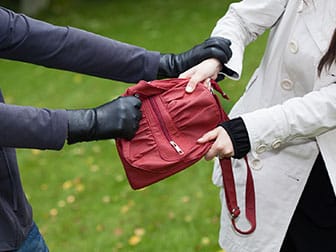
The man stole my bag and ran away.

I don't want to see you right now. I'm angry. Please go away.

When I got to the bus stop this morning, the bus had just driven away.

I tried to take a photo of the butterfly, but it flew away.
We also use back with places and people:
- I need to take these books back to the library.
- Could you put that back please?
- We are leaving now and we'll come back around 10 PM.
- When are you going back home today?
- Could you please pay back the money I lent you last week?
Other Phrasal Verbs with Away
- Stay Away (From) = To not go close / near something or someone
- You should really stay away from that area as it can be a little dangerous.
- Throw Away = To put something in the garbage
- I hate throwing away food when so many people in the world don't have anything.
- Paul gave me some candies, but I threw them away. I tried one and it was terrible.
- Put Away = Put something in its normal place / out of sight
- The teacher will get angry if you don't put your phone away during class.
- Give Away = 1. Give something to someone because you don't want it anymore or 2. When a company or service gives something to someone for free
- I gave away my old furniture to a couple of students.
- At the train station this morning, a juice company was giving away samples.
- Get Away (From) = To escape from a person or place or leave somewhere with difficulty
- I almost caught a fish but it got away.
Other Phrasal Verbs with Back
- Call / Phone / Text / Email / Write Back = To return a phone call, text, email, letter, etc..
- I'm sorry. I'm a little busy now. Could I call you back later?
Exercise
Open the exercise to begin the activity. Follow the instructions in the document.
Your homework this week (in addition to finishing the grammar and writing) is to discuss the topics on My Deloitte with your partner in a an Skype call. Topics this week include National Aboriginal Day. What are some topics related to this you could discuss with your partner?