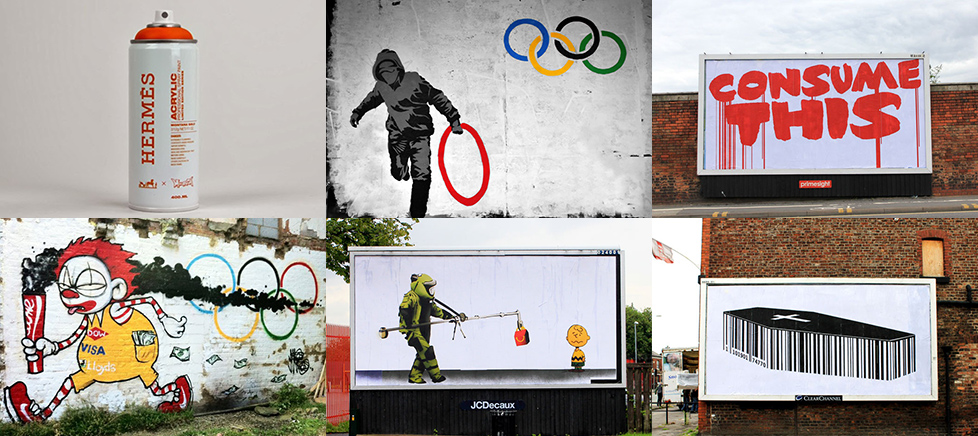
Brandalism Definition
The encroachment of ads, logos, and other types of corporate branding into public and traditionally non-commercial spaces, or the dissemination of corporate messages through methods or mediums not typically used for marketing purposes. n. The deliberate defacement of corporate iconography, generally for purposes of protest, parody, or social commentary.
Etymologies:
Blend of brand and vandalism.
Thesis Statement
The thesis Statement of an essay states the main idea/point/theme you want to convey about your topic. It is YOUR position on whatever it is that you are writing.
Topic Sentence
The topic sentence states the main point of a paragraph.
Brandalism is the new punkby fabianjeanvillanueva 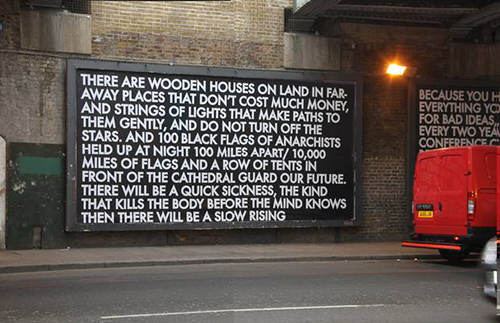
Earlier this year, The Independent published an article about Robert Montgomery, an artist who plasters verses of poetry over advertising billboards. The buzz this article generated on different social media platforms gave a huge notoriety to this art and created a new movement of advertising artists called «Brandalism». This portmanteau made of Brand and Vandalism feeds the debate about graffiti and vandalism. This street art is of course illegal and uses on-going convenient advertising spaces which are normally made for commercial products. Drawing inspiration from the long history of protest art, a group of guerilla street artists have set about reclaiming urban space from advertisers and the big brands they represent. Bill Posters is one of these artists: «We are lab rats for advertising executives who exploit our fears and insecurities through consumerism. I’m a human being, not a consumer. So by ‘taking’ these billboards, we are taking these spaces back. If Sao Paolo in Brazil can ban all outdoor advertising, so can we.» In 2007 the world’s fourth largest city, Sao Paolo, passed the Clean City Law to combat water, sound, air and visual pollution. Furthermore, Sao Paolo also legalized public art. Montgomery and 25 other artists have now successfully hijacked 37 billboards in five important cities across the United Kingdom and thus completed the world’s first international collaborative «subvertising» campaign. Their purpose is to challenge the dominance and authority and also the legitimacy of the advertising industry. They want to tackle its prejudicial impacts on issues as consumerism, body image, debt. It’s also a way to show support to the riots in UK and across Europe. «The advertising industry creates pressure when they manipulate our needs and desires. Pressure to have the latest gear, clothes and phones. This pressure erupted when kids took the streets across the country to claim what they had been told that they needed.» says Bill Posters. Simon Templeton and Joe Elan speak for the group behind the Brandalism project: “It’s our public space as well. You have a choice when you read a magazine, turn on the television, or turn on the radio. You have an agency over that. You can choose whether you engage with it or not. On the internet you can block it out if you want. Whereas in the pubic realm there’s no choice to opt out,” Joe Elan says. Brandalism is not about targeting any specific brand; it’s a critical assessment of the advertising industry in today’s society. The 26 international artists involved in the Brandalism project tackle a range of issues from debt and propaganda, to climate change, consumer and cultural values. They hope Brandalism can help initiate discussion and social change around a range of issues. Templeton argues that we need to look critically at consumer culture and its impact on the environment. “What is the end result of trying to have constant economic growth on a planet of finite resources?” |
Brandalism: Street artists hijack billboards for 'subvertising campaign'The Independent 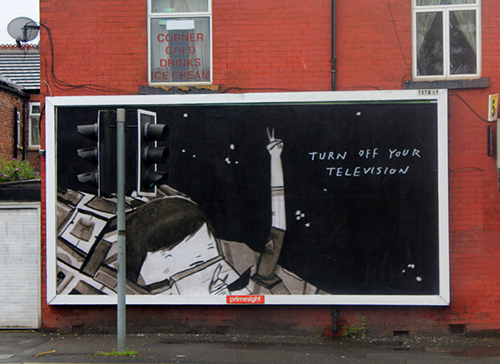
Among your comments were: “I love an intelligent response to advertising. Who asked the public if we want our faces filled with adverts as we walk the streets?” and “Hooray! More of this. Everyone should start doing this to adverts”. The relatively unknown artist responsible, Robert Montgomery from Scotland, seems to have struck a chord with readers. His verses were presented sparsely in black and white typography. They appeared overnight and passers-by, used probably to blanking out colourful sales images, either didn’t notice at all, or stopped transfixed to read the poems. A new movement of advertising artists have followed in Montgomery's wake. Nicknamed ‘Brandalism’, because it feeds into the graffiti versus vandalism debate, it has been taken up by artists in Britain, Australia and America and elsewhere. It is, like all street art, illegal. But street artists and graffitists are boldly exploiting the convenient rectangular spaces which normally purvey L’Oreal products or the latest albums. Twenty-six artists, including Montgomery, have now completed the world's first international collaborative “subvertising” campaign, hijacking 35 billboards across Leeds, Manchester, Birmingham, Bristol and London. They seek “to challenge the destructive impacts of the advertising industry” as well as to tackle its detrimental impact on issues such as body image, consumerism and debt. They are also, they say, responding to the riots last summer. Bill Posters, who famously subverted a Nike advert of Wayne Rooney clutching shopping bags with the tagline, 'Just Loot It', says: “The advertising industry creates pressure when they manipulate our needs and desires. Pressure to have the latest gear, clothes and phones. This pressure erupted when kids took to the streets across the country to claim what they had been told that they needed.” “We’re lab rats for ad execs who exploit our fears and insecurities through consumerism. I’m a human being, not a consumer. So by taking these billboards, we are taking these spaces back. If Sao Paolo in Brazil can ban all outdoor advertising, so can we”. |