Every year, cities around the world decide how to spend billions of dollars of public money. Should they invest in better public transit, build more affordable housing, or hire more police officers? These decisions are complex and involve difficult trade-offs. In this lesson, you'll step into the shoes of city planners. You will work in a team to decide your city's priorities and create a budget. You'll need to negotiate, justify your choices, and present your final plan to the public.
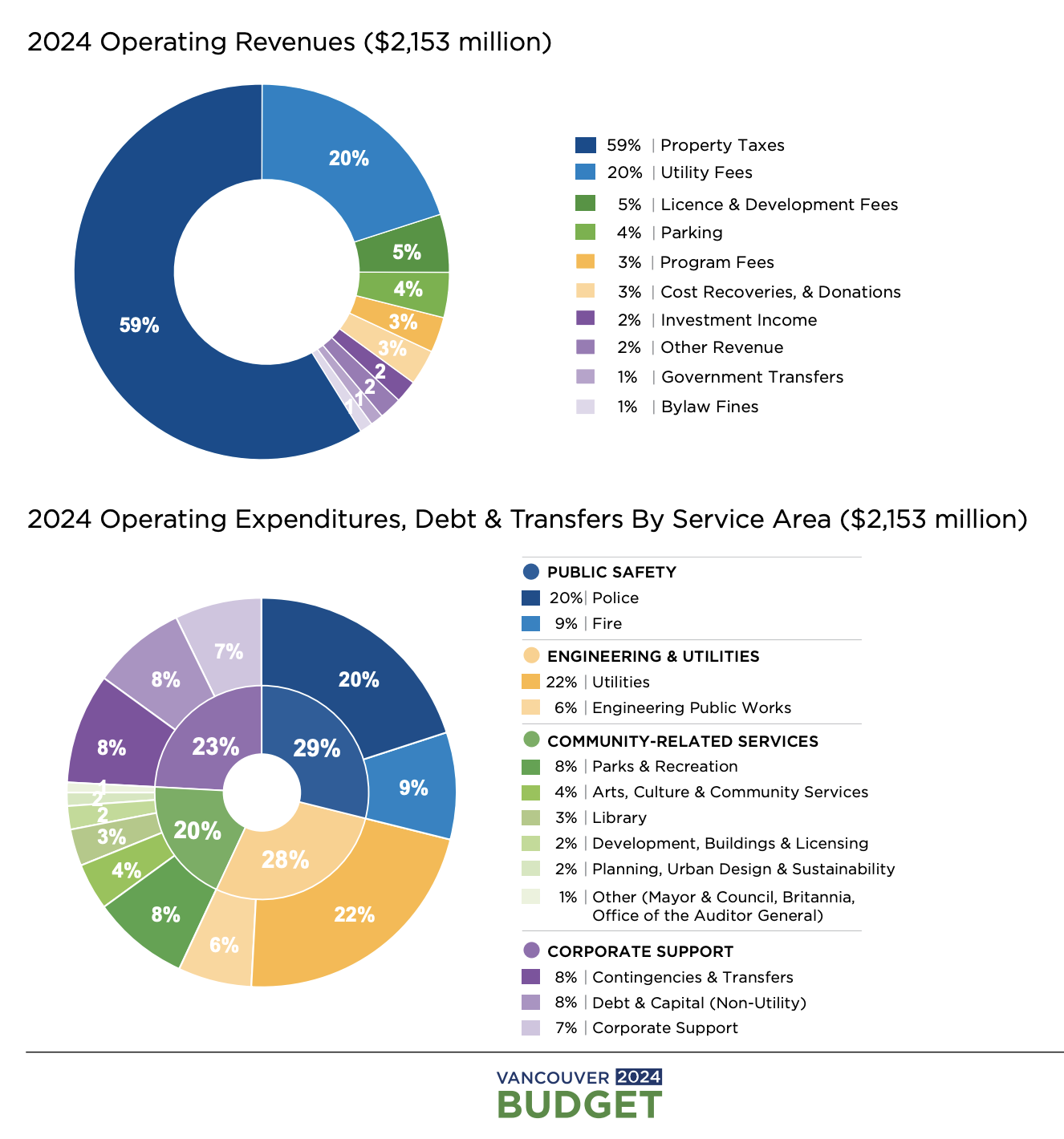
City Budget Priorities
Cities must balance the needs of many different departments.
Warm-up: What's Most Urgent?
In your groups, discuss the following five city departments. Rank them from 1 (most urgent priority) to 5 (least urgent priority) for the upcoming year. Be prepared to explain your reasoning.
- Public Transit (buses, trains, bike lanes)
- Affordable Housing (building new homes, supporting renters)
- Public Safety (police, fire department)
- Parks & Recreation (community centers, green spaces)
- Climate Action (preparing for floods, reducing emissions)
The Allocation Game
It's time to put your money where your mouth is! Your team is the city's budget committee. You have $100 million in tokens to allocate across the five key departments. Your goal is to create a budget that reflects your team's priorities.
Part 1: Your First Budget
Use the table below to guide your discussion. Decide how many of your $100 million in tokens to give to each department. You must spend all $100 million.
| Department | Funding ($ Millions) |
|---|---|
| Public Transit | |
| Affordable Housing | |
| Public Safety | |
| Parks & Recreation | |
| Climate Action | |
| Total | $100 |
Part 2: An Unexpected Constraint
Breaking news! City advisors have just announced that a major storm is predicted for next year. The city must create a new $20 million Emergency Fund immediately to prepare for potential flooding and damage.
Your team must now revise your budget. You need to find $20 million from your previously allocated funds. Discuss the trade-offs. Which department will receive less funding? Why? Update your budget table.
Language Focus: Justifying Your Decisions
When you discuss budgets, you need specific language to talk about numbers and to explain your choices. Let's look at two key areas: describing amounts and explaining trade-offs.
Using Quantifiers and Percentages
Quantifiers help us describe amounts without always using exact numbers. They are useful for summarizing budget allocations.
- The majority of / Most of: "The majority of our funding went to Public Safety." (e.g., $51 million or more)
- A large portion of: "We allocated a large portion of the budget to Housing." (e.g., $30-40 million)
- A significant amount of: "A significant amount was invested in Transit."
- A quarter of / Half of: "Exactly a quarter of our budget is for Climate Action." ($25 million)
- A small fraction of / A minority of: "Only a small fraction of the funds were left for Parks & Recreation."
- Fewer / More ... than: "We gave fewer dollars to Parks than to Housing."
- Less / More ... than: "Public Safety received more funding than any other department."
Making Trade-offs with Discourse Markers
When you take money from one area to fund another, you are making a trade-off. Discourse markers like however and on the other hand are perfect for explaining these difficult choices by connecting contrasting ideas.
Form
Sentence 1 (explains a goal or desire). + However, + Sentence 2 (explains the reality or constraint).
Sentence 1 (explains one side). + On the other hand, + Sentence 2 (explains the contrasting side).
Examples
"We believe parks are vital for community well-being. However, the urgent need for an emergency fund forced us to reduce their budget."
"Increasing the public safety budget could make citizens feel more secure. On the other hand, it means less investment in long-term solutions like affordable housing."
Listening in Context: City Council in Action
Viewing Guide
Now, let's see how language is used in a real government meeting. This activity uses segments from a full Vancouver City Council meeting. Click the links below to watch each clip and consider the questions.
-
Clip 1: The Proclamation (Watch from 2:18)
Notice the official language the Mayor and councillors use to discuss a social issue. How does it compare to everyday conversation?
-
Clip 2: A Citizen's Appeal (Watch from 12:45)
This unscripted comment is from a member of the public. How is his language different from the councillors'? Is his direct approach persuasive?
-
Clip 3: Climate Progress & Data (Watch from 37:30)
Listen to how the Director of Sustainability uses numbers and comparisons (e.g., quantifiers like "18%," "15%") to report on the city's progress.
Speaking: 60-Second Press Briefing
Imagine you are speaking to news reporters. Your team has 60 seconds to present and defend your final budget. Your goal is to convince the public that your choices are the best for the city.

Instructions
- Work with your team to prepare a short speech (60 seconds).
- Choose one or two team members to be the spokesperson(s).
- Use the language of quantifiers, percentages, and trade-offs.
Structure your briefing:
- Opening: State your main priority. ("Our budget's top priority is...")
- Justification: Explain how you allocated the funds. Use quantifiers. ("For this reason, the majority of our funds were allocated to...")
- Trade-off: Acknowledge a difficult cut you had to make. Use however or on the other hand. ("We wanted to give more to...; however, ...")
- Closing: End with a strong statement about the expected positive outcome for the city. ("We are confident this budget will create a safer and more resilient city.")
Each team will present their briefing to the class.