In this lesson, you will learn about a new environmental law and think about how its ideas could be applied in your own community. You will practice extracting key information from a policy, using the passive voice for formal reporting, and proposing a local environmental project.
Hook: Your City, But Better
Think about the city or town where you live. Are there any areas that are neglected, polluted, or could be improved with more nature?
With a partner, spend two minutes brainstorming two specific things that environmental restoration could fix in your local area. Think about parks, rivers, old industrial sites, or even just streets with no trees. Be ready to share one idea with the class.
For example:
- "The old factory lot could be turned into a community garden."
- "The small river that runs through the city could be cleaned up so wildlife can return."
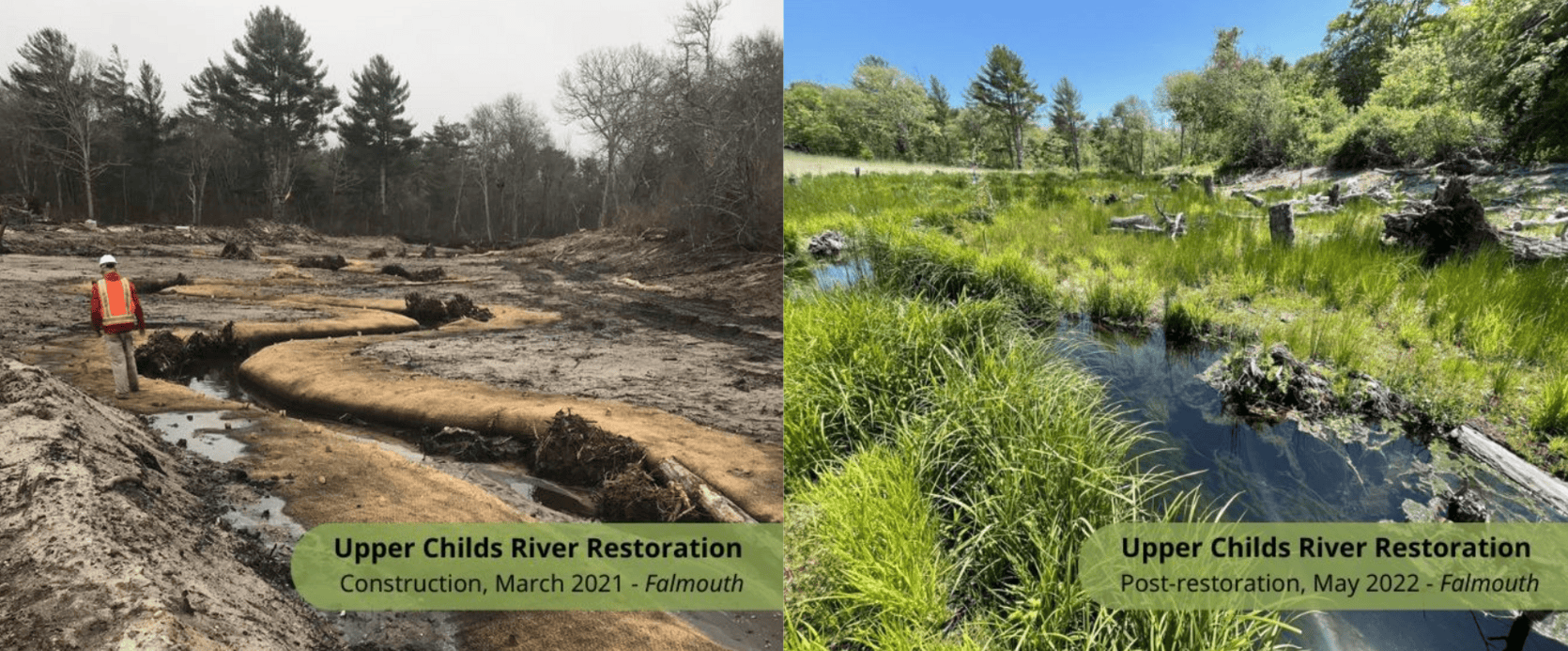
From Neglected to Natural
Ecological restoration can transform spaces into valuable community assets.
Skim: The EU Nature Restoration Law
Governments and organizations often create policies to guide their actions. In 2024, the European Union (EU) officially adopted the Nature Restoration Law. This is a major plan to help repair damaged ecosystems across Europe.
Read the summary of the law's main goals below. Your task is to quickly find and understand two concrete targets. A target is a specific goal that can be measured.
Summary: EU Nature Restoration Law
The primary goal of this regulation is the long-term recovery of biodiverse and resilient nature across the EU’s land and sea areas. It is seen as a crucial step to meet climate and biodiversity objectives.
Key Targets:
- By 2030, restoration measures must be put in place for at least 20% of the EU’s land and sea areas.
- By 2050, similar measures must be applied to all ecosystems in need of restoration.
- Specific focus is placed on restoring marine habitats, such as seagrass beds, and terrestrial ecosystems like wetlands, forests, and rivers. For example, a target was set to reverse the decline of pollinator populations by 2030.
- Urban areas are also included. Member states are required to ensure that there is no net loss of urban green space and urban tree canopy cover by 2030. A steady increase after this date is also expected.
Vocabulary: Policy into Action
Understanding policy requires specific vocabulary. These words describe the goals, the actions, and the process of checking progress.
| Word | Definition | Example |
|---|---|---|
| Restoration (n.) | The act of returning something to its original or a better condition. | The project focused on the restoration of the local wetland. |
| Ecosystem (n.) | All the living things in an area and the way they affect each other and the environment. | A healthy forest ecosystem has a wide variety of plants and animals. |
| Target (n.) | A specific, measurable goal that you aim to achieve. | A key target of the policy is to increase green space by 10%. |
| Implementation (n.) | The process of putting a decision or plan into effect. | The implementation of the new law will begin next month. |
| Monitoring (n.) | The act of observing and checking the progress or quality of something over time. | Regular monitoring is required to ensure the project is successful. |
Grammar: Passives for Formal Reporting
When we discuss policies, plans, and official reports, we often use the passive voice. This is because the action or the result is more important than who is doing it. It creates a more formal and objective tone.
Form: Subject + be + Past Participle
The structure of the passive voice is simple. The object of an active sentence becomes the subject of the passive sentence.
- Active: "Member states will implement the new rules."
- Passive: "The new rules will be implemented (by member states)."
The agent ("by member states") is often left out if it's obvious, unknown, or unimportant.
When to Use It
Use the passive voice to:
- Focus on the action: "Restoration measures must be put in place by 2030." (The measures are the focus, not who puts them there.)
- Be formal and impersonal: "It is expected that tree cover will increase." (This sounds more official than "We expect...")
- When the 'doer' is unknown or obvious: "The polluted land was cleaned up last year." (We might not know exactly who cleaned it, or it's not the point.)
Look at these examples from the law summary:
"It is seen as a crucial step..."
"Specific focus is placed on restoring marine habitats..."
"A target was set to reverse the decline..."
Localization Sprint: Your Micro-Pilot
Now it's your turn to be a policy advisor. In small teams, you will design a small-scale "micro-pilot" project for your local area, inspired by the EU Nature Restoration Law. You have 25 minutes.
Instructions
- Choose a Site: Pick one of the local areas you discussed in the hook, or a new one. (e.g., A shoreline, an old industrial site, a section of a river).
- Define the Action: What will you do? Connect your action to one of the law's targets (e.g., increase green space, restore a habitat).
- Set a Timeline: When will this happen? Be realistic. (e.g., Phase 1 completed by 2026).
- Identify Beneficiaries: Who benefits from this project? (e.g., local residents, wildlife, students).
- Draft Your Plan: Write 3-4 sentences outlining your plan. You must use at least two passive voice constructions.
Example Micro-Pilot Plan:
Site: The empty concrete lot on Main Street.
Plan: Our pilot project will transform the empty lot on Main Street. The concrete will be removed, and a community 'pocket park' will be created. Native trees and pollinator-friendly flowers are to be planted by local volunteers. This project will increase urban green space and benefit local residents by providing a new place for relaxation and community gatherings. The project is expected to be finished by next summer.
Pitch & Feedback
Each team will now give a 45-second "stand-up" pitch to the class. One person from your group should present your micro-pilot plan.
As you listen to other teams, think about these two questions:
- Feasibility: How realistic is their plan? What could make it difficult?
- Equity: Who benefits the most? Does it help everyone in the community fairly?
After each pitch, the class will have 30 seconds to provide brief feedback based on these two points.
Wrap-Up: Gallery Walk
In the final activity, we will do a "gallery walk."
If you wrote your plan on paper, post it on the wall. If not, just leave it on your desk.
Walk around the classroom and read the other teams' micro-pilot plans. Your teacher will give you one sticky note. On the sticky note, write down one potential "risk" or "challenge" for a plan that is not your own and stick it to their paper.
For example:
- "Risk: Getting funding from the city might be slow."
- "Challenge: Some local residents might not like the construction noise."